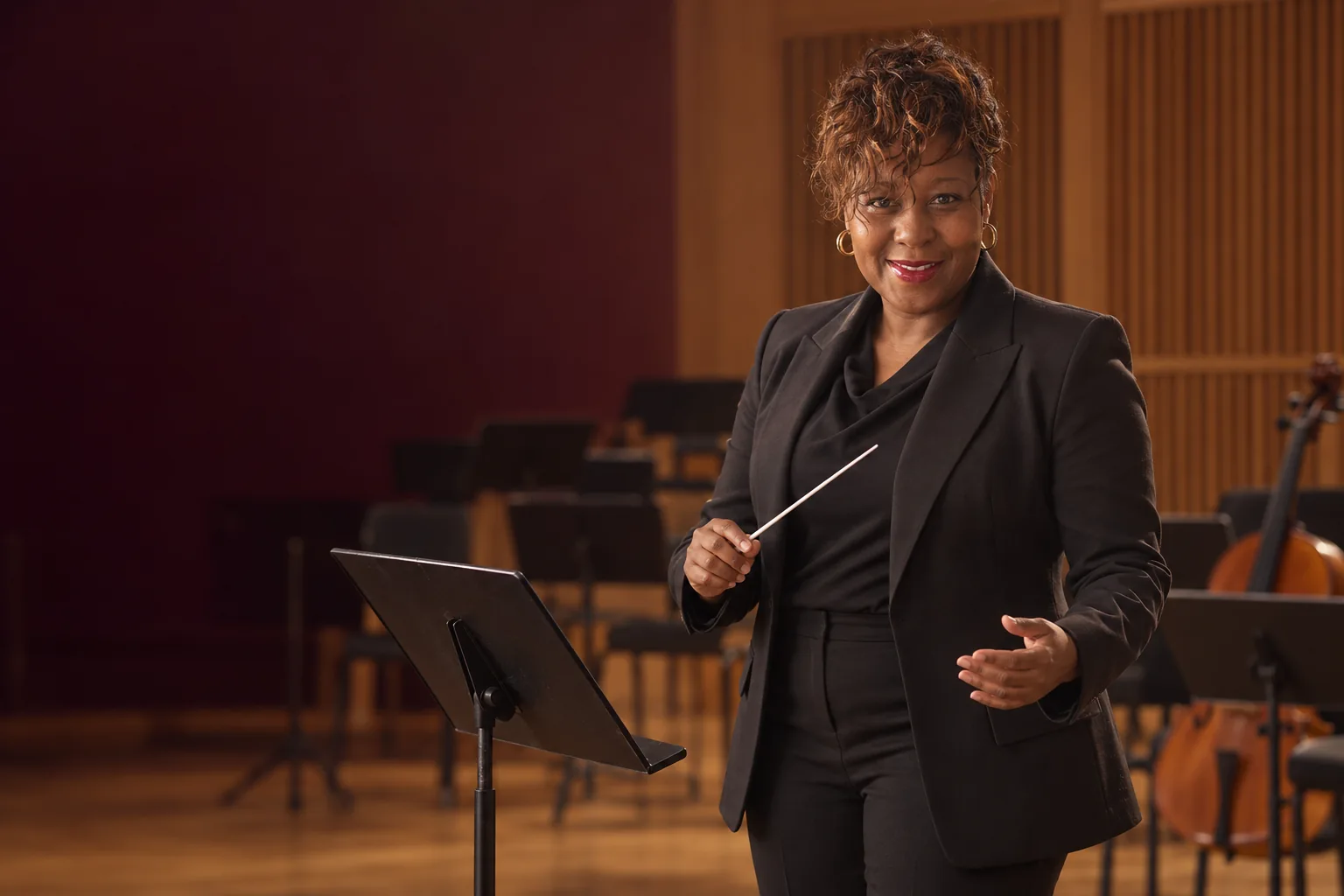
Unathi Malunga is a South African orchestral conductor whose musical life began long before her legal career. Trained first as a pianist and later as a cellist, she grew up performing as a soloist, orchestral player and chorister. She studied Music and Law at Rhodes University and later completed a BA Honours in Music Education with distinction, before returning to intensive musical study and focused orchestral-conducting training.
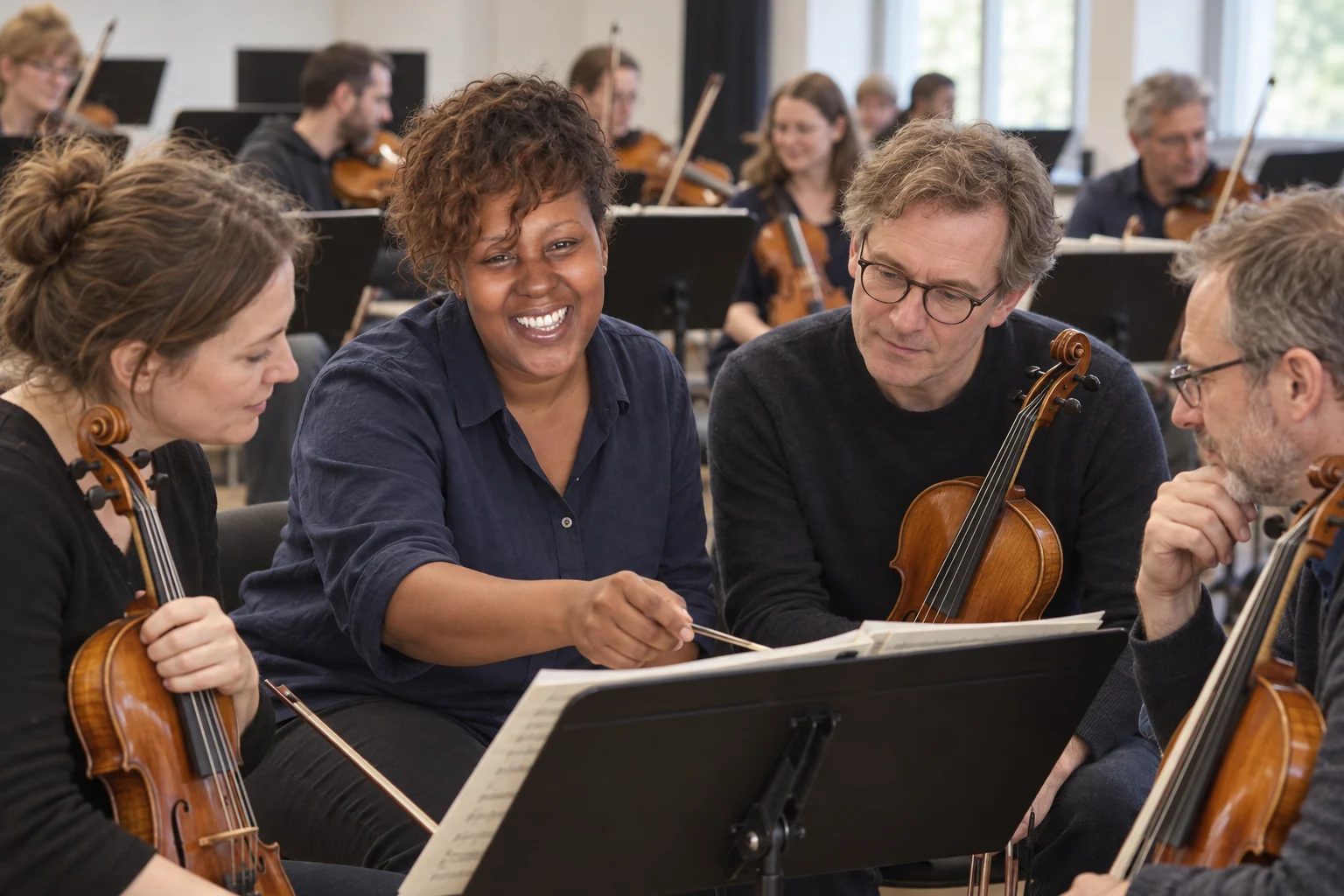
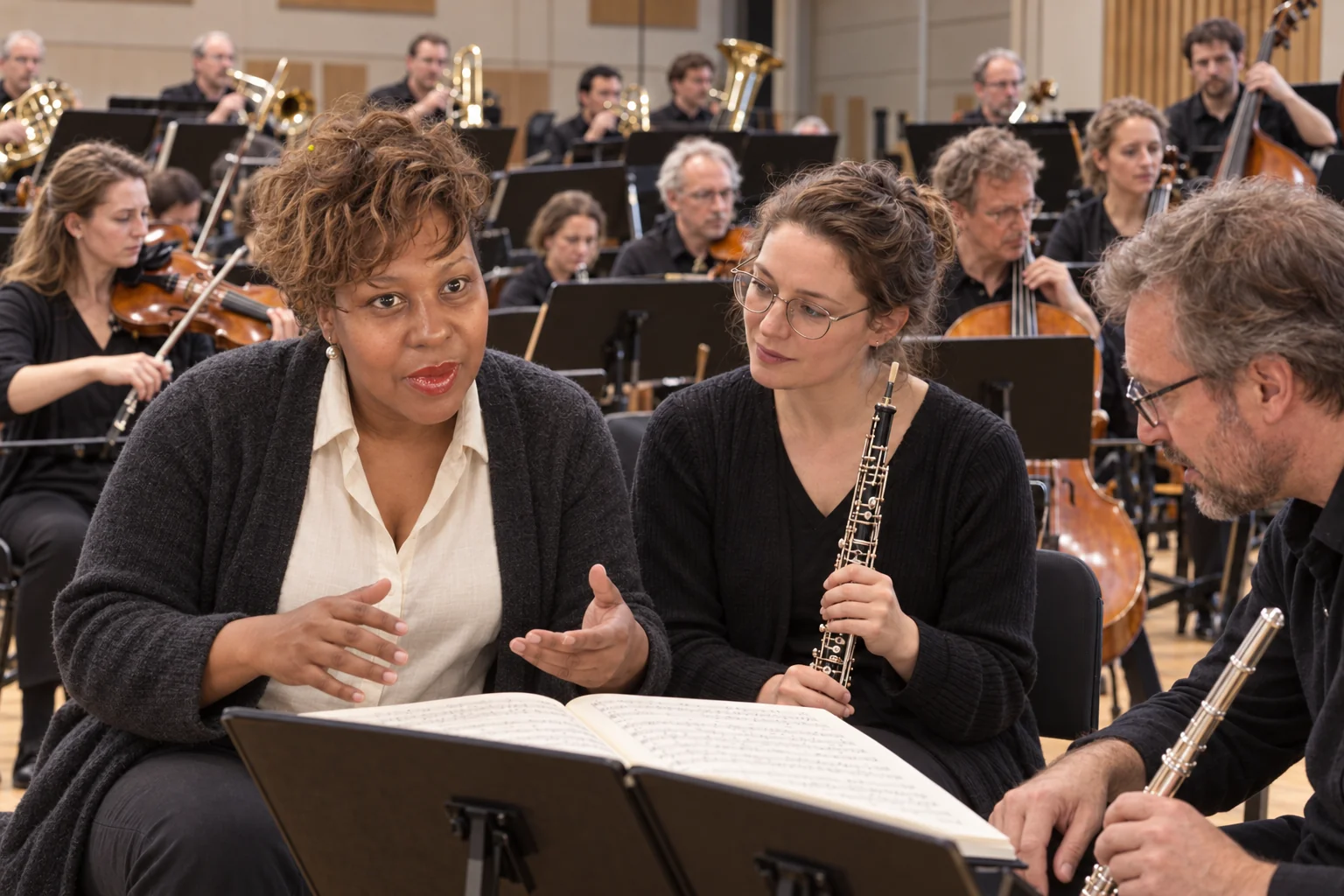
Her conducting studies have included work with Corvin Matei and Martin Berger at Stellenbosch University, together with masterclasses and professional engagement with conductors including Alexander Fokkens, Kazem Abdullah, Robert Maxym, Daniel Boico, Desar Sulejmani and David de Villiers. That training has been shaped by the practical demands of the profession: full-score reading, rehearsal planning, baton technique, orchestral listening, interpretation and the ability to communicate musical intention clearly to an ensemble.
In 2016, Malunga served as Assistant Conductor to Maestro Desar Sulejmani on the South African-German production of Mozart’s Die Zauberflöte at Joburg Theatre, accompanied by the German Rhine Philharmonic Orchestra. Her subsequent international pathway included an invitation to the European Summer Music Academy as its first participant from outside Europe, together with work connected to Camerata Academica Freiburg.
In 2018, she was invited by RMB and Maestro Richard Cock to conduct at RMB Starlight Classics. Her appearance marked the first time a woman had conducted in the event’s then twenty-year history.
In 2026, Malunga joined the Western Balkans Youth Orchestra as Assistant Conductor to Sulejmani, working across an intensive rehearsal and performance period in the Western Balkans and Germany. The engagement formed part of The Baton Forward, an international market-access project focused on professional orchestral participation, rehearsal-room work, artistic exchange, documentation and future positioning within international orchestral networks.
Her current practice is concerned not only with individual engagements but with the larger ecology around orchestral work. She is developing Orchestral Arts Africa, a multidisciplinary orchestral-arts institution designed to connect performance with education, opera, ballet, musical theatre, new music, conductor development, emerging artists, recording, screen work and international collaboration.
Malunga approaches conducting as both an artistic discipline and a form of leadership. The podium matters, but so do the hours before it: the score, the rehearsal room, the decisions, the trust and the responsibility of shaping collective sound. Her work is increasingly directed toward building a sustained professional conducting career while widening the space for African artistic authority within orchestral music. Her artistic identity is also informed by the unusual route through which she arrived at the podium. Years spent in entertainment law, broadcasting, rights, governance and creative-industry policy have given her a close understanding of the institutions around artistic work: who commissions, who funds, who owns, who decides and how careers are built. Rather than separating those experiences from music, she brings them into a wider conception of orchestral leadership. She is interested in programmes that give sustained space to African composers and emerging artists while developing new audiences.
The concert is the outcome. The rehearsal is the work.